
Blooms Taxonomy Chart Verbs
Blooms Taxonomy Chart Verbs - Ideas by stating main ideas. Web bloom’s taxonomy is a hierarchical classification of the different levels of thinking, and should be applied when creating course objectives. Anderson, l.w., krathwohl, d.r., airasian, p.w., cruikshank, k.a., mayer, r.e., pintrich, p.r., raths, j., wittrock, m.c. Web summary of the revised version of bloom’s taxonomy with verbs for writing learning objectives at all levels of the cognitive, affective, and psychomotor domains. Web learn what bloom’s taxonomy is and the differences between original vs. Web 64 rows bloom’s taxonomy provides a list of action verbs based on each level of understanding. Web read on and dive into over 200 bloom’s taxonomy verbs that can change the way you frame learning objectives and guide students toward success! Web learned material by recalling facts, terms, basic concepts and answers demonstrate understanding : Web the verbs listed in table 1 are linked with each level of thinking, which in turn are tied to activities, products and/or outcomes specific to the objective. Web the chart below arranges bloom's levels of cognitive activity from simple to complex and lists verbs that correspond to each level. Examine and break information into parts by identifying motives. Solve problems to new situations by applying acquired knowledge, facts, techniques and rules. Web summary of the revised version of bloom’s taxonomy with verbs for writing learning objectives at all levels of the cognitive, affective, and psychomotor domains. This table of verbs lists cognitive processes that fit into bloom’s six categories and help identify the cognitive complexity or the order of thinking. Web read on and dive into over 200 bloom’s taxonomy verbs that can change the way you frame learning objectives and guide students toward success! Use the chart to help formulate effective. Web 64 rows bloom’s taxonomy provides a list of action verbs based on each level of understanding. Web bloom’s taxonomy comprises three learning domains: Web additional information about bloom’s revised taxonomy is available here: Web bloom’s taxonomy is a hierarchical classification of the different levels of thinking, and should be applied when creating course objectives. This assists instructors when creating lesson and course. Web bloom's taxonomy verbs include evaluate: Web bloom’s taxonomy is a hierarchical classification of the different levels of thinking, and should be applied when creating course objectives. Web the verbs listed in table 1 are linked with each level of thinking, which in turn are tied to activities, products and/or outcomes specific. Web learned material by recalling facts, terms, basic concepts and answers demonstrate understanding : Discover a list of action verbs that you can use to form learning objectives. Web revised bloom’s taxonomy process verbs, assessments, and questioning strategies. This table of verbs lists cognitive processes that fit into bloom’s six categories and help identify the cognitive complexity or the order. Web bloom’s taxonomy is a powerful tool to frame teaching and learning. Anderson, l.w., krathwohl, d.r., airasian, p.w., cruikshank, k.a., mayer, r.e., pintrich, p.r., raths, j., wittrock, m.c. In one model is a framework that not only lays out for teachers the kinds of thinking that we, as humans,. This assists instructors when creating lesson and course. Solve problems to. Use the chart to help formulate effective. Web additional information about bloom’s revised taxonomy is available here: Web learn what bloom’s taxonomy is and the differences between original vs. Web revised bloom’s taxonomy process verbs, assessments, and questioning strategies. Anderson, l.w., krathwohl, d.r., airasian, p.w., cruikshank, k.a., mayer, r.e., pintrich, p.r., raths, j., wittrock, m.c. Use the chart to help formulate effective. Web revised bloom’s taxonomy process verbs, assessments, and questioning strategies. Web additional information about bloom’s revised taxonomy is available here: Solve problems to new situations by applying acquired knowledge, facts, techniques and rules. Web comparing, translating, interpreting, giving descriptions, and stating main ideas. Web 64 rows bloom’s taxonomy provides a list of action verbs based on each level of understanding. Web verbs for bloom’s taxonomy. Web revised bloom’s taxonomy process verbs, assessments, and questioning strategies. Solve problems to new situations by applying acquired knowledge, facts, techniques and rules. Web bloom's taxonomy verbs include evaluate: Web bloom's taxonomy verbs include evaluate: This assists instructors when creating lesson and course. Within each domain, learning can take place at a number of levels. Web bloom’s taxonomy comprises three learning domains: Web revised bloom’s taxonomy process verbs, assessments, and questioning strategies. Web the chart below arranges bloom's levels of cognitive activity from simple to complex and lists verbs that correspond to each level. Web read on and dive into over 200 bloom’s taxonomy verbs that can change the way you frame learning objectives and guide students toward success! Deals of the dayshop best sellersshop our huge selectionfast shipping Web 64 rows. Solve problems to new situations by applying acquired knowledge, facts, techniques and rules. Web solve problems to new situations by applying acquired knowledge, facts, techniques and rules in a different way. In one model is a framework that not only lays out for teachers the kinds of thinking that we, as humans,. This table of verbs lists cognitive processes that. Anderson, l.w., krathwohl, d.r., airasian, p.w., cruikshank, k.a., mayer, r.e., pintrich, p.r., raths, j., wittrock, m.c. Within each domain, learning can take place at a number of levels. Web learn what bloom’s taxonomy is and the differences between original vs. Ideas by stating main ideas. Web 64 rows bloom’s taxonomy provides a list of action verbs based on each level. Web the chart below arranges bloom's levels of cognitive activity from simple to complex and lists verbs that correspond to each level. Ideas by stating main ideas. Web learned material by recalling facts, terms, basic concepts and answers demonstrate understanding : Solve problems to new situations by applying acquired knowledge, facts, techniques and rules. Web read on and dive into over 200 bloom’s taxonomy verbs that can change the way you frame learning objectives and guide students toward success! Web bloom’s taxonomy is a classification of the different outcomes and skills that educators set for their students (learning outcomes). Web bloom’s taxonomy comprises three learning domains: This assists instructors when creating lesson and course. Web comparing, translating, interpreting, giving descriptions, and stating main ideas. Discover a list of action verbs that you can use to form learning objectives. Web summary of the revised version of bloom’s taxonomy with verbs for writing learning objectives at all levels of the cognitive, affective, and psychomotor domains. Web solve problems to new situations by applying acquired knowledge, facts, techniques and rules in a different way. This table of verbs lists cognitive processes that fit into bloom’s six categories and help identify the cognitive complexity or the order of thinking. Web revised bloom’s taxonomy process verbs, assessments, and questioning strategies. Web learn what bloom’s taxonomy is and the differences between original vs. Web bloom's taxonomy verbs include evaluate:
Printable Bloom's Taxonomy Verbs
![Bloom's Digital Taxonomy Verbs [Infographic] Teaching strategies](https://i.pinimg.com/736x/3b/6b/67/3b6b676655e4f987b51293de84bc8e7c.jpg)
Bloom's Digital Taxonomy Verbs [Infographic] Teaching strategies
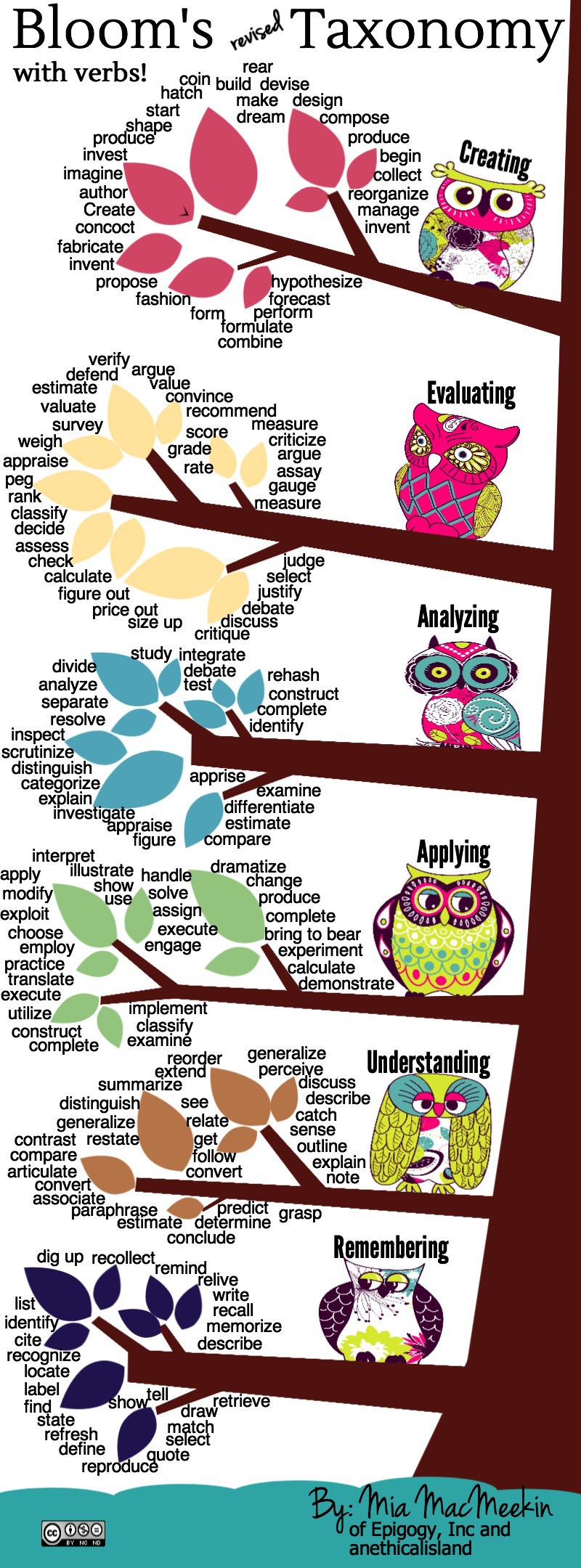
Bloom's Revised Taxonomy Action Verbs infographic eLearning Infographics

Bloom's Taxonomy Bloom's Taxonomy Education
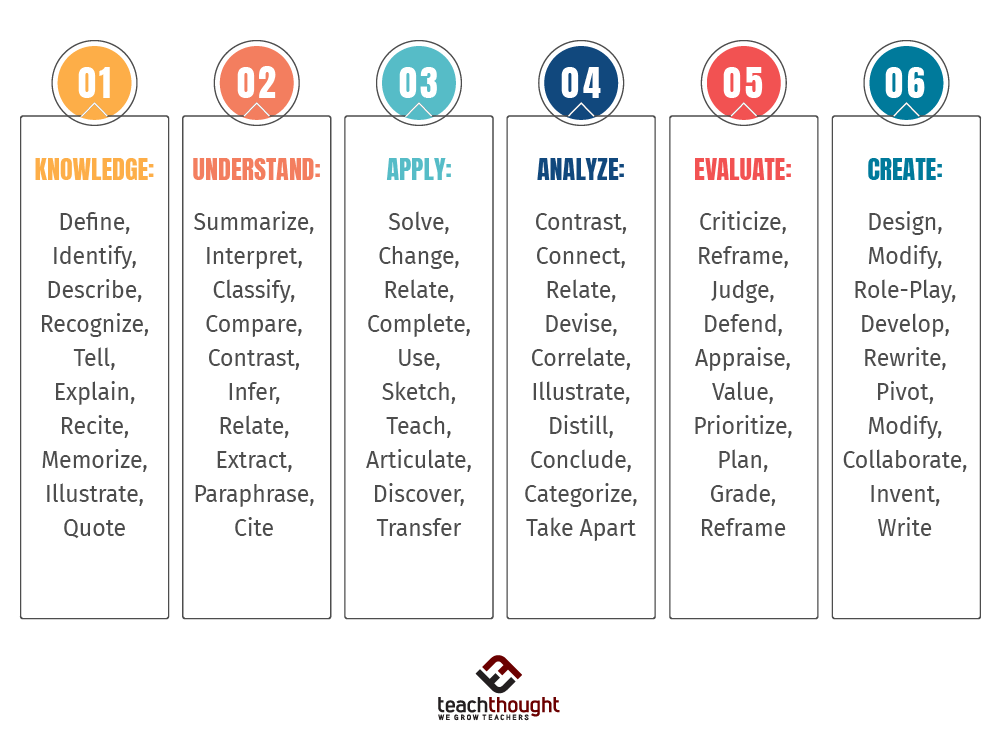
100+ Bloom’s Taxonomy Verbs For Critical Thinking
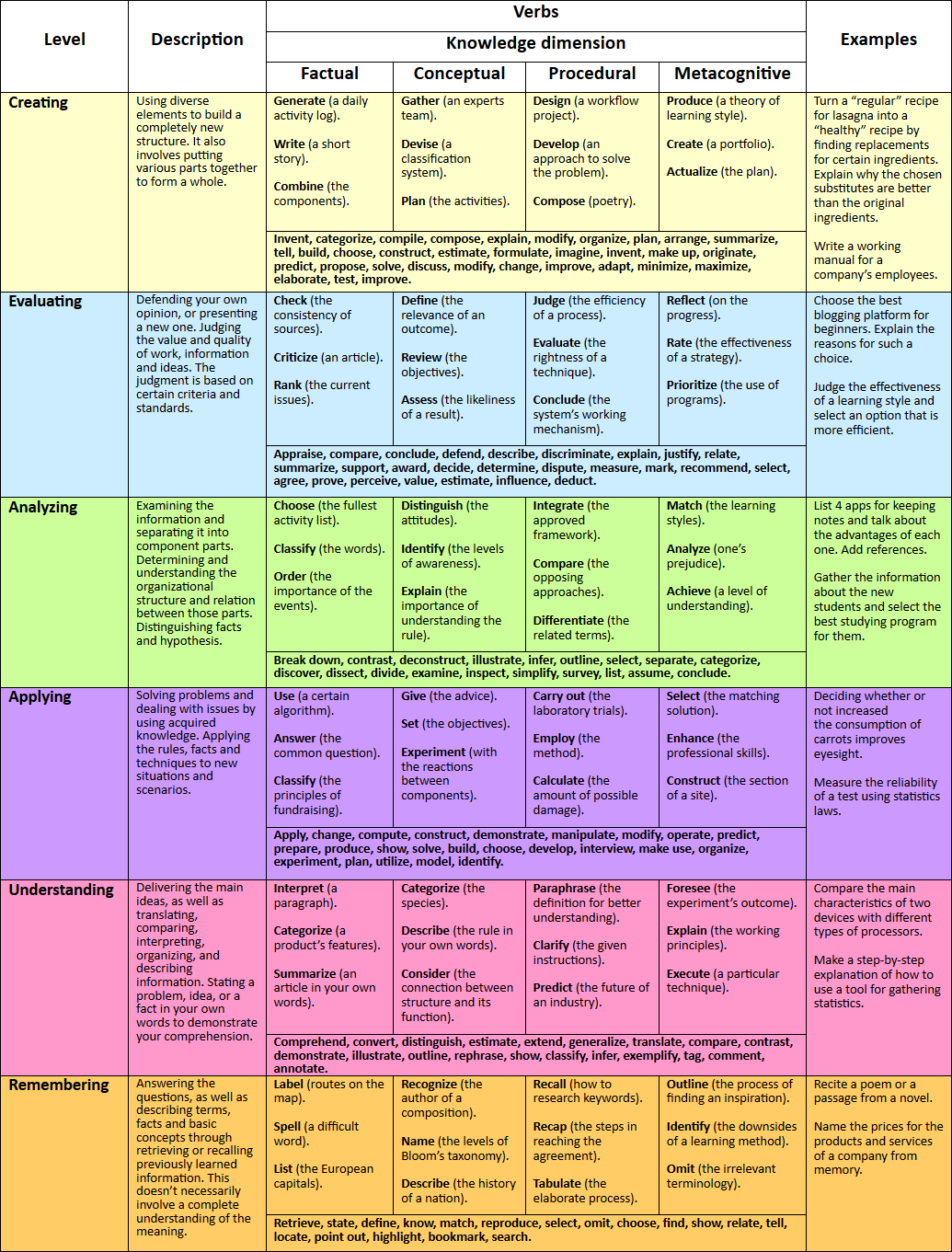
Bloom's Taxonomy 2024 Verbs, Chart, & How to Use This All

Bloom's Taxonomy Verbs Free Classroom Chart

Bloom's Taxonomy Chart Verbs

Printable Bloom's Taxonomy Verbs
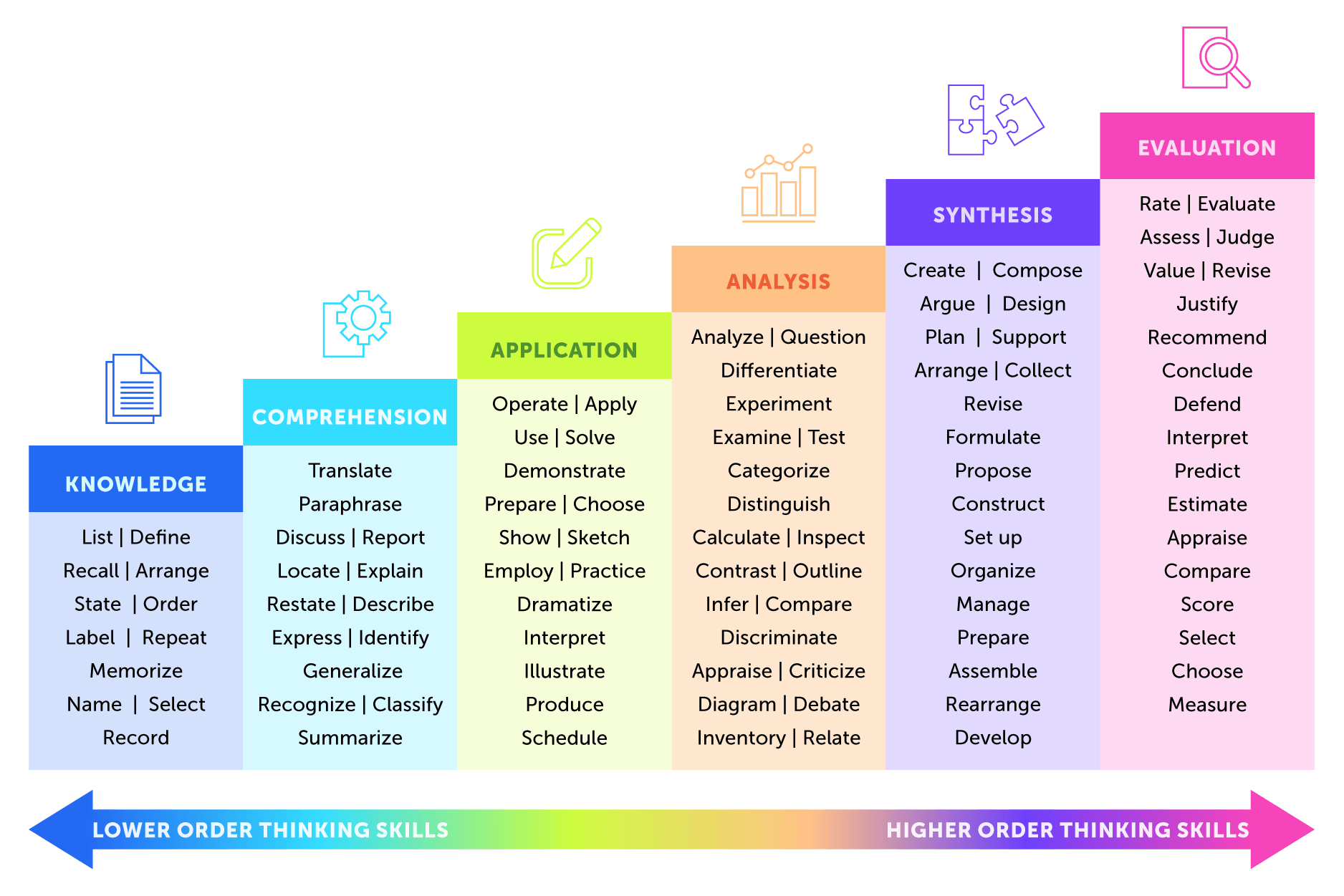
Bloom’s Taxonomy for Effective Learning 47 Verbs for Objectives
Web Verbs For Bloom’s Taxonomy.
Web Additional Information About Bloom’s Revised Taxonomy Is Available Here:
Web Bloom’s Taxonomy Is A Hierarchical Classification Of The Different Levels Of Thinking, And Should Be Applied When Creating Course Objectives.
Examine And Break Information Into Parts By Identifying Motives.
Related Post: