
Crane Hand Signals Chart
Crane Hand Signals Chart - Rotation towards body indicates travel backward. Web when there is a lot of traffic at a worksite, it is essential for workers to be able to use hand signals. Crane hand signal sign.v2 created date: Web crane hand signals are an essential safety element of lifting and rigging applications. Crawler, locomotive, and truck cranes. Web using standardized hand signals helps maintain continuity between job sites and promotes safety across the entire construction industry. Web every trained signal person must know the crane hand signals for stop, emergency stop, boom movements (raise, lower, extend, swing), and how to hoist or lower the load. Web basic standard hand signals for cranes and hoisting equipment. Download a pdf version of our crane hand signals reference chart below to take with you to the job site. Some special operations may require adaptations of these basic signals. Web when there is a lot of traffic at a worksite, it is essential for workers to be able to use hand signals. Learn what they are, what they look like, and how to use them in our guide. It ensures safe and efficient crane operations by providing standardized gestures that indicate specific actions or commands. Here are some standard hand signals for crane operation. Direction of rotation away from body indicates travel forward; Crawler, locomotive, and truck cranes. Web prior to beginning lifting operations using voice signals, the signals shall be discussed and agreed upon by the person directing lifting operations, the crane operator, and the designated signal person. Web illustrates hand signals for the signaller and the crane or hoist operator to use when hoisting. Web the following are the most commonly used hand signals for directing crane lifting operations. Web every trained signal person must know the crane hand signals for stop, emergency stop, boom movements (raise, lower, extend, swing), and how to hoist or lower the load. Hand signal charts must be either posted on the equipment or conspicuously posted in the vicinity of the hoisting operations. Web illustrates hand signals for the signaller and the crane or hoist operator to use when hoisting. W i th forearm vert i ca l , and foref i nger point i ng up, move hand i n smal l. Web the following are the most commonly used hand signals for directing crane lifting operations. Learn what they are, what they look like, and how to use them in our guide. Web every trained signal person must know the crane hand signals for stop, emergency stop, boom movements (raise, lower, extend, swing), and how to hoist or lower the load.. Learn what they are, what they look like, and how to use them in our guide. Web the following are the most commonly used hand signals for directing crane lifting operations. Web the following are the most commonly used hand signals for directing crane lifting operations. Web standard hand signals for cranes. Web a crane hand signal chart is used. Crawler, locomotive, and truck cranes. Web travel (both tracks) rotate fists around each other in front of body; With forearm vertical, forefinger pointing up, move hand in small horizontal circles. Web crane hand signals are an essential safety element of lifting and rigging applications. Web hand signals for crane operation. Cranes and derricks in construction. W i th forearm vert i ca l , and foref i nger point i ng up, move hand i n smal l hori zontal circ l e. So when your team removes an old rooftop unit and positions a new one, the people on the ground and on the rooftop must use established hand. It ensures safe and efficient crane operations by providing standardized gestures that indicate specific actions or commands. Web using standardized hand signals helps maintain continuity between job sites and promotes safety across the entire construction industry. Direction of rotation away from body indicates travel forward; Web crane hand signals are an essential safety element of lifting and rigging applications. Web. Some special operations may require adaptations of these basic signals. With arm extended downward, forefinger pointing down, move hand in small horizontal circles. Web hand signals for crane operation. Learn what they are, what they look like, and how to use them in our guide. Crane hand signal sign.v2 created date: With forearm vertical, forefinger pointing up, move hand in small horizontal circles. It ensures safe and efficient crane operations by providing standardized gestures that indicate specific actions or commands. Web illustrates hand signals for the signaller and the crane or hoist operator to use when hoisting. Web standard hand signals for cranes. Direction of rotation away from body indicates travel. With forearm vertical, forefinger pointing up, move hand in small horizontal circles. With arm extended downward, forefinger pointing down, move hand in small horizontal circles. Then regular signal is given to indicate desired action. Web feel free to print and study the universal mobile crane hand signals chart below. Crane hand signal sign.v2 created date: Here are some standard hand signals for crane operation. Some special operations may require adaptations of these basic signals. Download a pdf version of our crane hand signals reference chart below to take with you to the job site. When there is a lot of traffic at a worksite, it is essential for workers to be able to use hand. Direction of rotation away from body indicates travel forward; Some special operations may require adaptations of these basic signals. With forearm vertical, forefinger pointing up, move hand in small horizontal circles. Hand signal charts must be either posted on the equipment or conspicuously posted in the vicinity of the hoisting operations. A crane operator can’t hear you. Here are some standard hand signals for crane operation. Web a crane hand signal chart is used to facilitate clear communication between the crane operator and the signal person (or rigger) on the ground. Web clear and regular communication is vital for safe and e˚ective crane operations. Here are some standard hand signals for crane operation. Web feel free to print and study the universal mobile crane hand signals chart below. You and the operator are in charge of an important operation. When there is a lot of traffic at a worksite, it is essential for workers to be able to use hand signals. When using hand signal be sure the operator can see you and that both of you understand all the signals. Rotation towards body indicates travel backward. Web using standardized hand signals helps maintain continuity between job sites and promotes safety across the entire construction industry. Learn what they are, what they look like, and how to use them in our guide.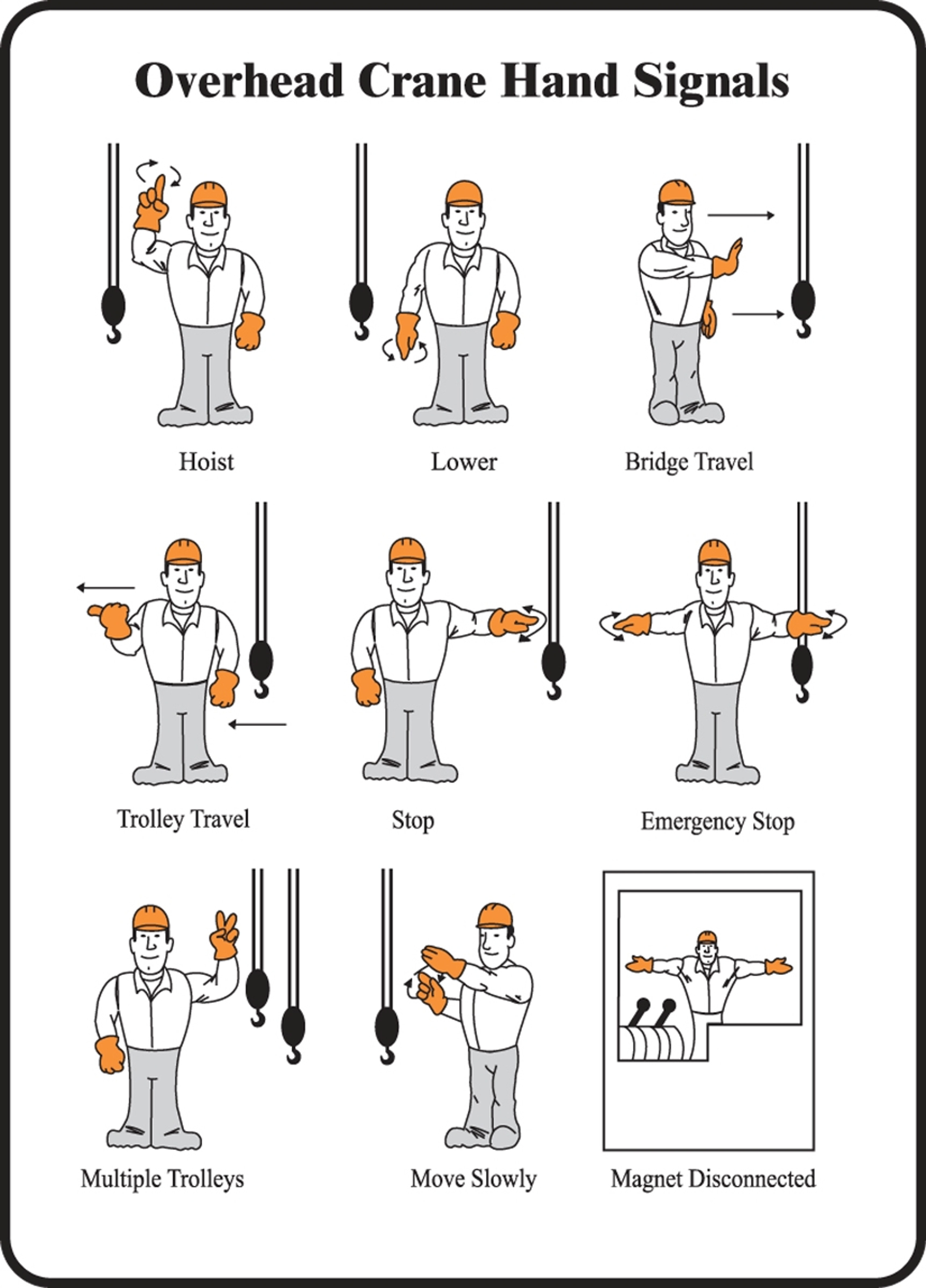
Mobile Crane Hand Signals

Crane Operator Hand Signals Chart
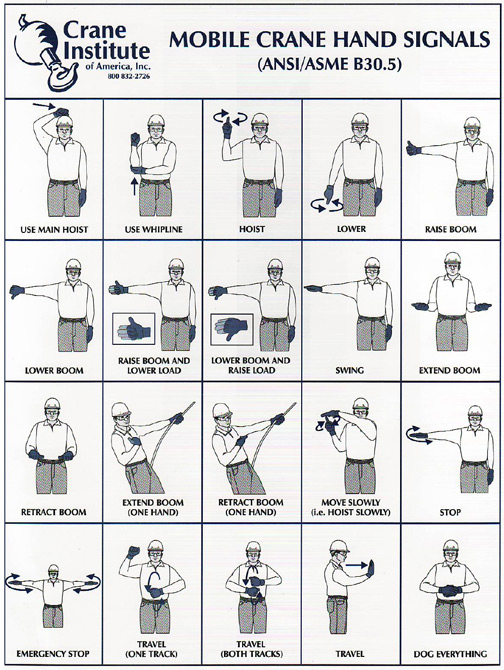
Crane Hand Signals Crane Rentals Bozeman Montana Crane Service

Crane Hand Signals to Know for a Safe Construction Site BigRentz

mobile crane hand signals stampsurvival

OSHA Crane Hand Signals Chart

OSHA Crane Hand Signals Chart

Crane Signals 101 Can You Hear Me Now?
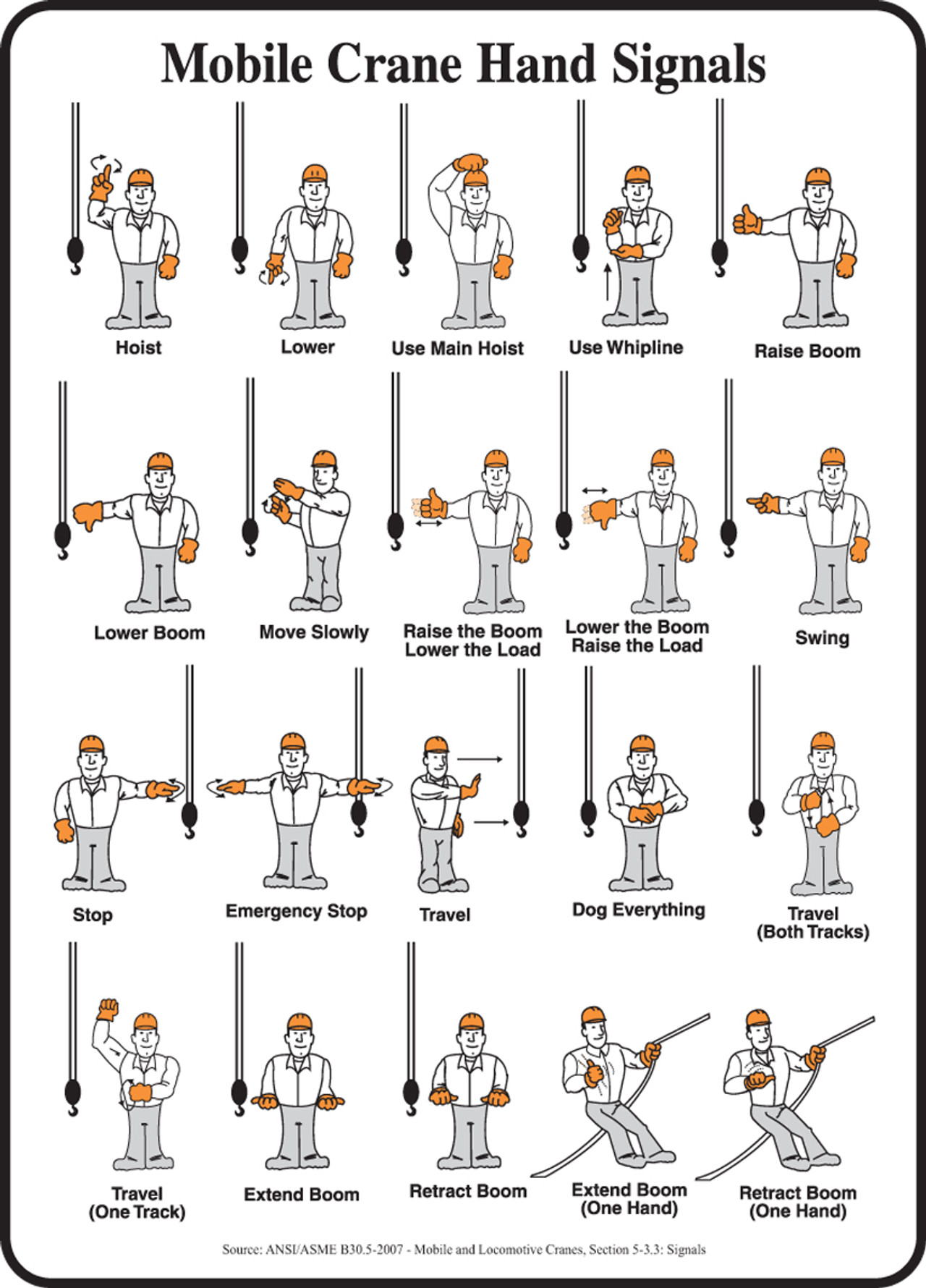
2010 Standard Crane Signals Sign

Crane Hand Signals to Know for a Safe Construction Site BigRentz
Web Whether You’re A Crane Operator Or A Signal Person, Understanding Crane Hand Signals Can Help You And Fellow Workers Stay Safe By Avoiding Accidents And Injuries.
Web Every Trained Signal Person Must Know The Crane Hand Signals For Stop, Emergency Stop, Boom Movements (Raise, Lower, Extend, Swing), And How To Hoist Or Lower The Load.
With Arm Extended Downward, Forefinger Pointing Down, Move Hand In Small Horizontal Circles.
Then Regular Signal Is Given To Indicate Desired Action.
Related Post: