
Hand Signal Chart For Cranes
Hand Signal Chart For Cranes - Here are some standard hand signals for crane operation. So when your team removes an old rooftop unit and positions a new one, the people on the ground and on the rooftop must use established hand signals to communicate safely with the crane operator. We show graphics of the various crane hand signals. (for crawler cranes only) travel (one track) indicate track to be locked by raising fist on that side. Web using standard hand signals is the most widely used manner of signaling a crane operator. If modifications are made to any signals, they must be agreed upon by the crane operator, lift director and signal person and. Here are some standard hand signals for crane operation. Web the following are the most commonly used hand signals for directing crane lifting operations. Some special operations may require adaptations of these basic signals. Cranes and derricks in construction. Hand signal charts must be either posted on the equipment or conspicuously posted in the vicinity of the hoisting operations. Web § 1926.1422 signals—hand signal chart. Hand signal charts must be either posted on the equipment or conspicuously posted in the vicinity of the hoisting operations. Learn what they are, what they look like, and how to use them in our guide. Some special operations may require adaptations of these basic signals. Web standard hand signals for cranes. Here are some standard hand signals for crane operation. Basic understanding of crane operation and limitations b. Web using standardized hand signals helps maintain continuity between job sites and promotes safety across the entire construction industry. A hand signal chart can usually be found on the side of the crane or it should be conspicuously posted in the vicinity of where hoisting operations are being conducted. Here are some standard hand signals for crane operation. Web standard hand signals for cranes. Web your crane operators need hand signalers to do their job safely. Basic understanding of crane operation and limitations b. Web using standard hand signals is the most widely used manner of signaling a crane operator. Web the following are the most commonly used hand signals for directing crane lifting operations. Web travel (both tracks) rotate fists around each other in front of body; If modifications are made to any signals, they must be agreed upon by the crane operator, lift director and signal person and. Basic understanding of crane operation and limitations b. Some special. With arm extended downward, forefinger pointing down, move hand in small horizontal circles. Web your crane operators need hand signalers to do their job safely. Hand signal charts must be either posted on the equipment or conspicuously posted in the vicinity of the hoisting operations. Cranes and derricks in construction. Direction of rotation away from body indicates travel forward; Crane hand signal sign.v2 created date: When using hand signal be sure the operator can see you and that both of. Web the document provides standardized hand signals for controlling tower crane operations. Rotation towards body indicates travel backward. Web the following are the most commonly used hand signals for directing crane lifting operations. A crane operator can’t hear you. With forearm vertical, forefinger pointing up, move hand in small horizontal circles. Web using standardized hand signals helps maintain continuity between job sites and promotes safety across the entire construction industry. Crane hand signal sign.v2 created date: Hand signal charts must be either posted on the equipment or conspicuously posted in the vicinity of. Web charts identifying these hand signals must be posted on equipment or noticeably near hoisting operations. Web clear and regular communication is vital for safe and e˚ective crane operations. Cranes and derricks in construction. Web crane hand signals are an essential safety element of lifting and rigging applications. Web the following are the most commonly used hand signals for directing. Here are some standard hand signals for crane operation. Hand signal charts must be either posted on the equipment or conspicuously posted in the vicinity of the hoisting operations. So when your team removes an old rooftop unit and positions a new one, the people on the ground and on the rooftop must use established hand signals to communicate safely. (for crawler cranes only) travel (one track) indicate track to be locked by raising fist on that side. Web hand signals for crane operation. With forearm vertical, forefinger pointing up, move hand in small horizontal circles. Web prior to signaling crane operations, all signalpersons shall be tested by a designated person and demonstrate their qualifications in the following areas: It. A crane operator can’t hear you. Web the following are the most commonly used hand signals for directing crane lifting operations. (for crawler cranes only) travel (one track) indicate track to be locked by raising fist on that side. Web charts identifying these hand signals must be posted on equipment or noticeably near hoisting operations. Web using standard hand signals. Web travel (both tracks) rotate fists around each other in front of body; Web crane hand signals are an essential safety element of lifting and rigging applications. Download a pdf version of our crane hand signals reference chart below to take with you to the job site. Web hand signals for hoist and crane operations. Some special operations may require. Learn what they are, what they look like, and how to use them in our guide. A hand signal chart can usually be found on the side of the crane or it should be conspicuously posted in the vicinity of where hoisting operations are being conducted. Web hand signals for crane operation. Web basic standard hand signals for cranes and hoisting equipment. Direction of rotation away from body indicates travel forward; Crawler, locomotive, and truck cranes. Web clear and regular communication is vital for safe and e˚ective crane operations. Web the following are the most commonly used hand signals for directing crane lifting operations. It ensures safe and efficient crane operations by providing standardized gestures that indicate specific actions or commands. W i th forearm vert i ca l , and foref i nger point i ng up, move hand i n smal l hori zontal circ l e. Web using standard hand signals is the most widely used manner of signaling a crane operator. A crane operator can’t hear you. Here are some standard hand signals for crane operation. Illustrates hand signals for the signaller and the crane or hoist operator to use when hoisting. Web charts identifying these hand signals must be posted on equipment or noticeably near hoisting operations. Here are some standard hand signals for crane operation.
OSHA Crane Hand Signals Chart
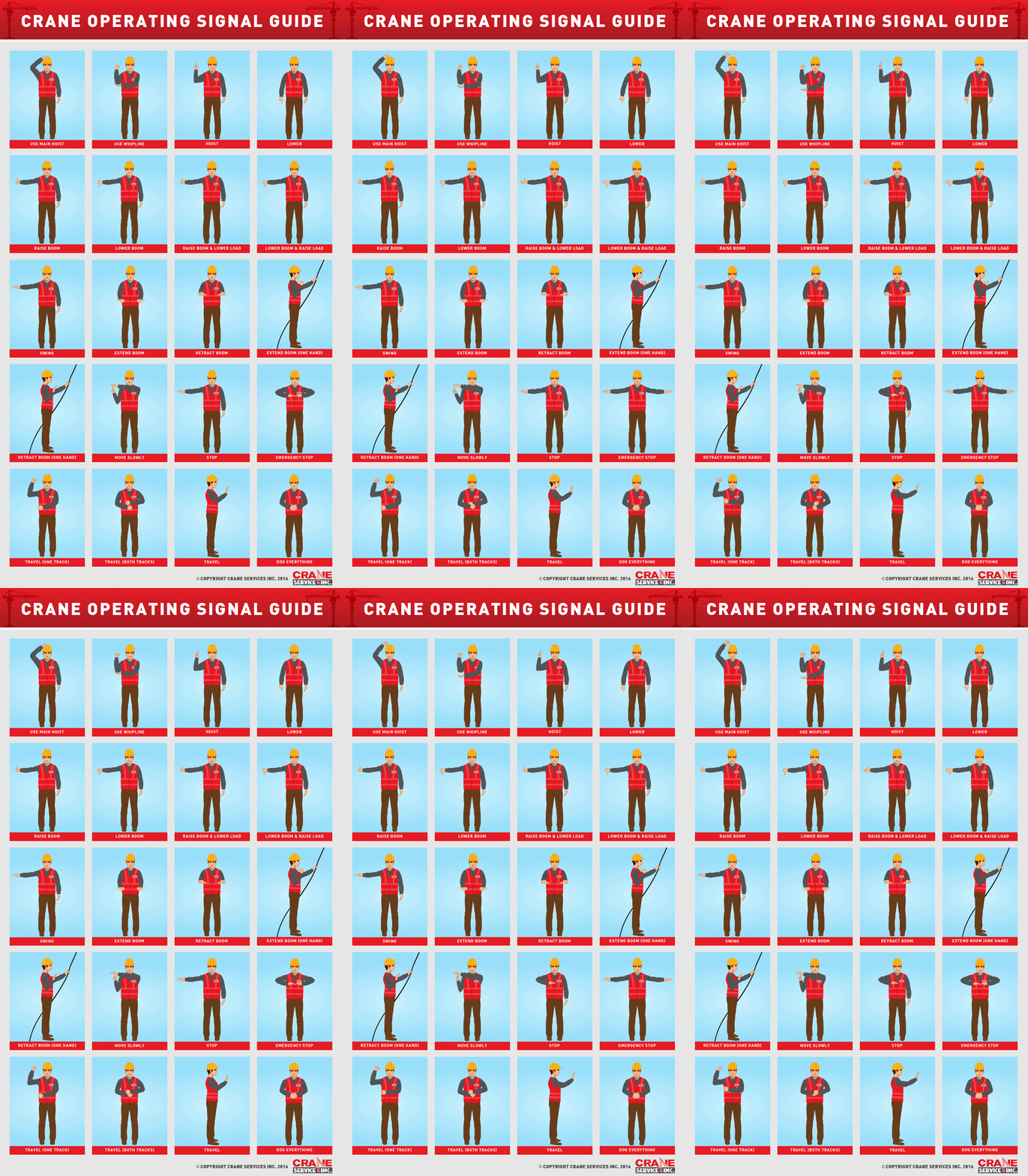
Crane Operator Hand Signal Guide ⋆ Crane Network News
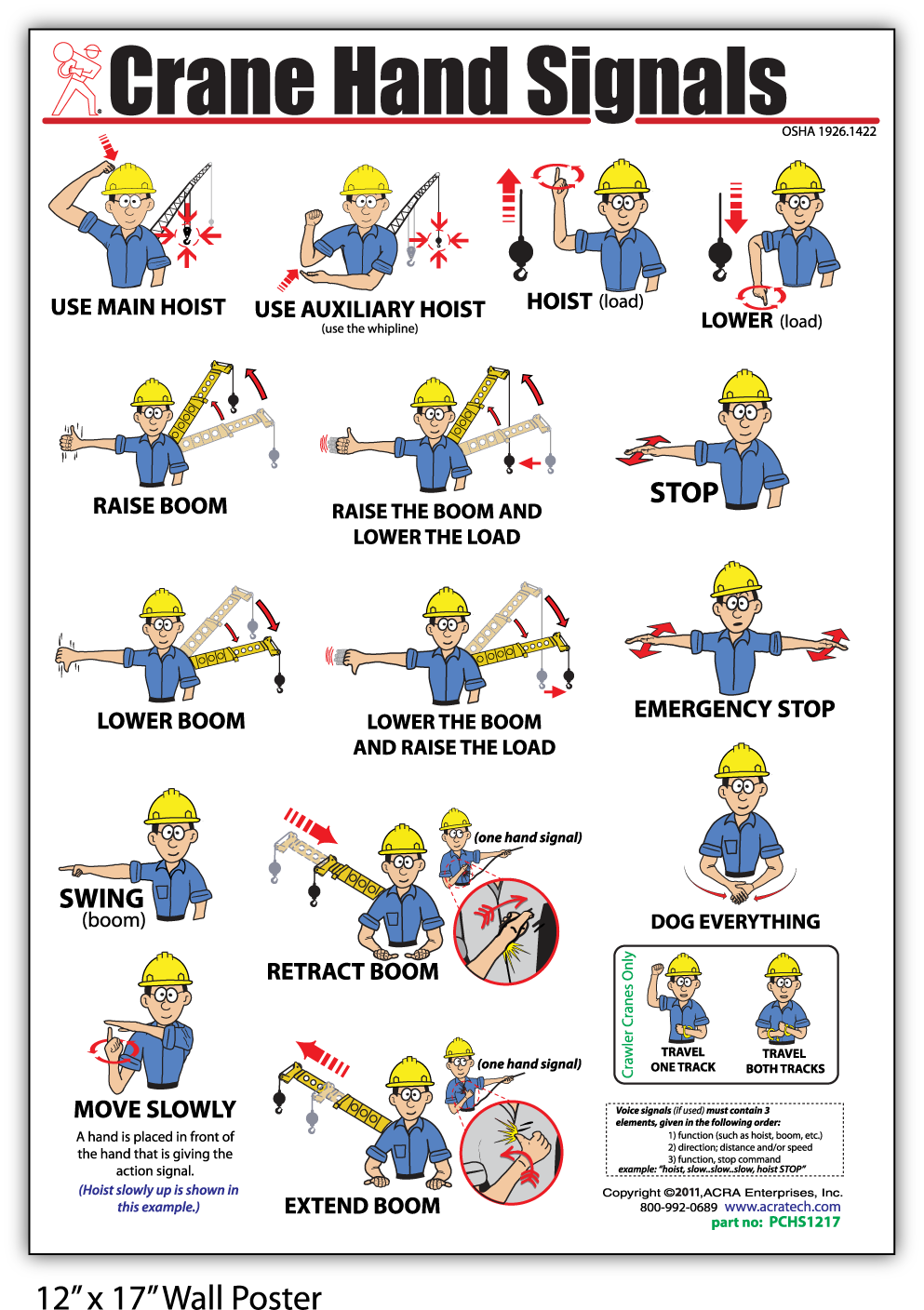
Crane Hand Signal Posters (OSHA 1926.1422) PCHS1217
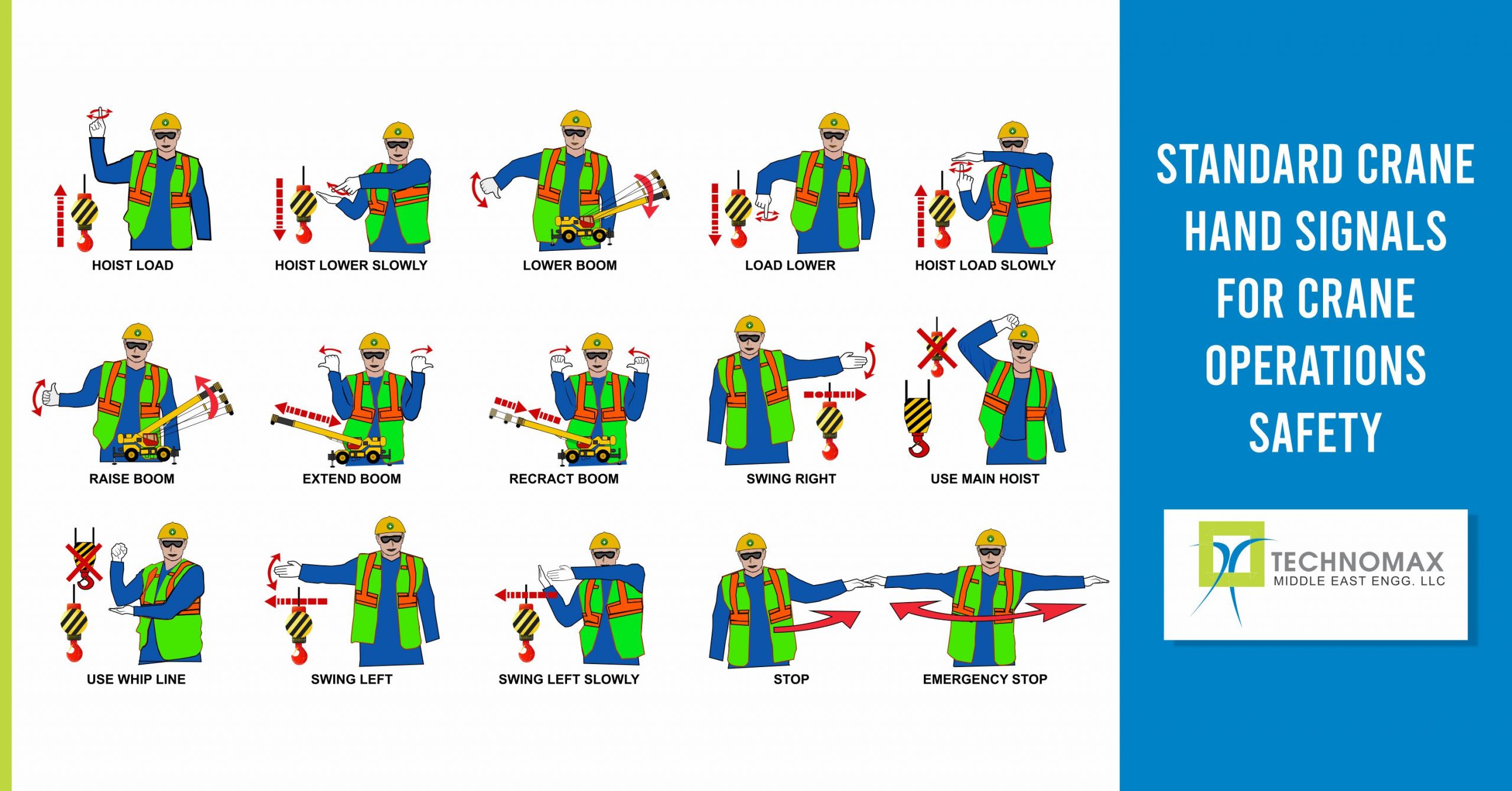
Standard Crane Hand Signals For Crane Operations Technomax

Crane Hoist Sign Mobile Crane Hand Signals SafetyKore
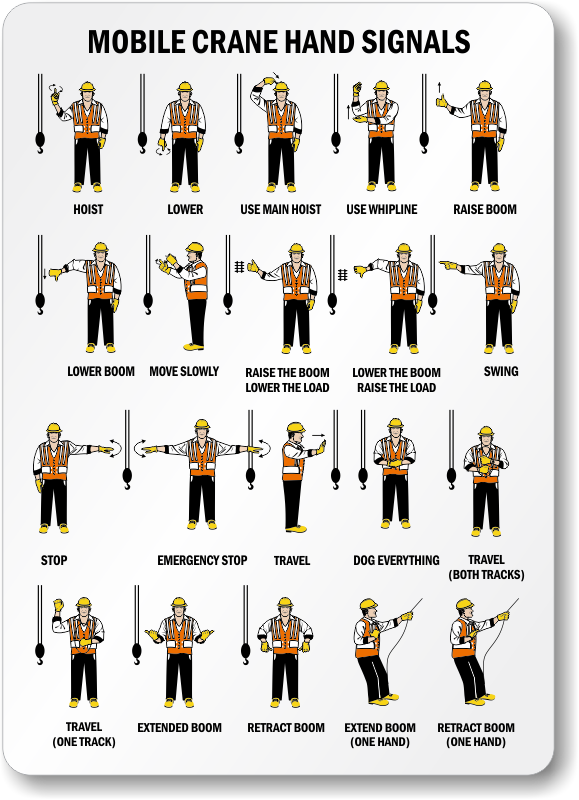
Mobile Crane Hand Signals Label, SKU LB2601
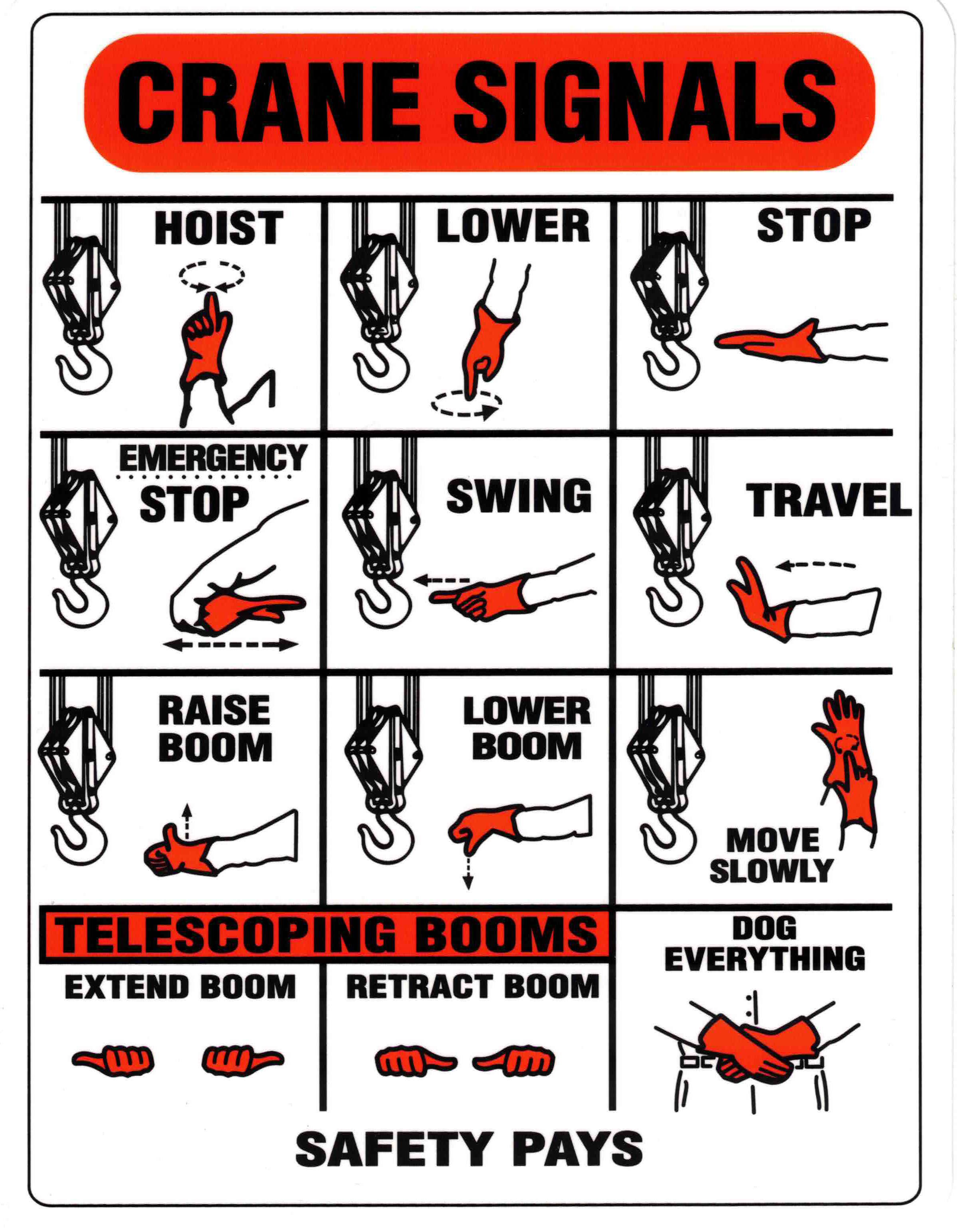
Crane Hand Signal Chart Large Aerial & Crane Experts
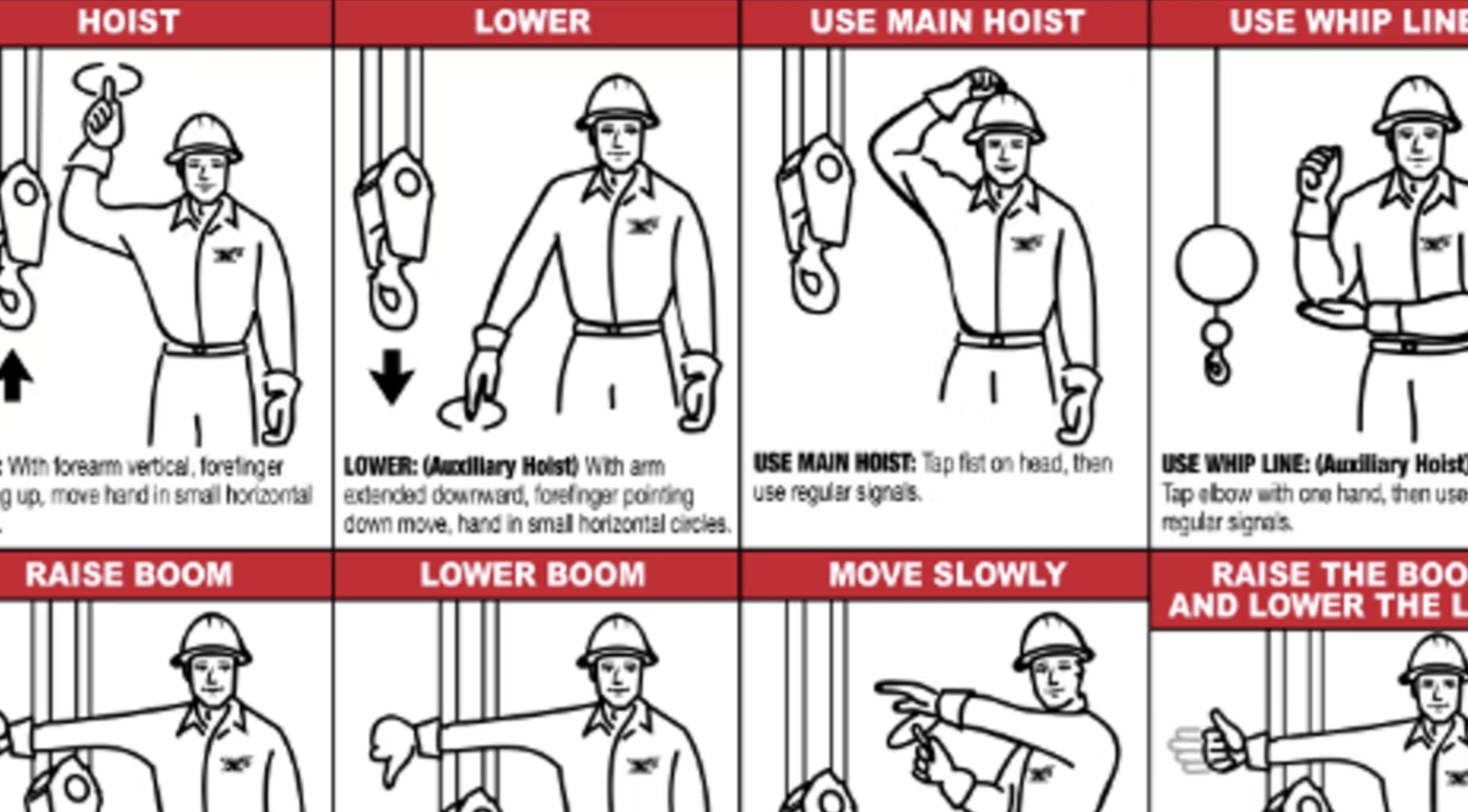
Crane Hand Signals Printable

Crane Hand Signals Pdf The Best Crane 2017
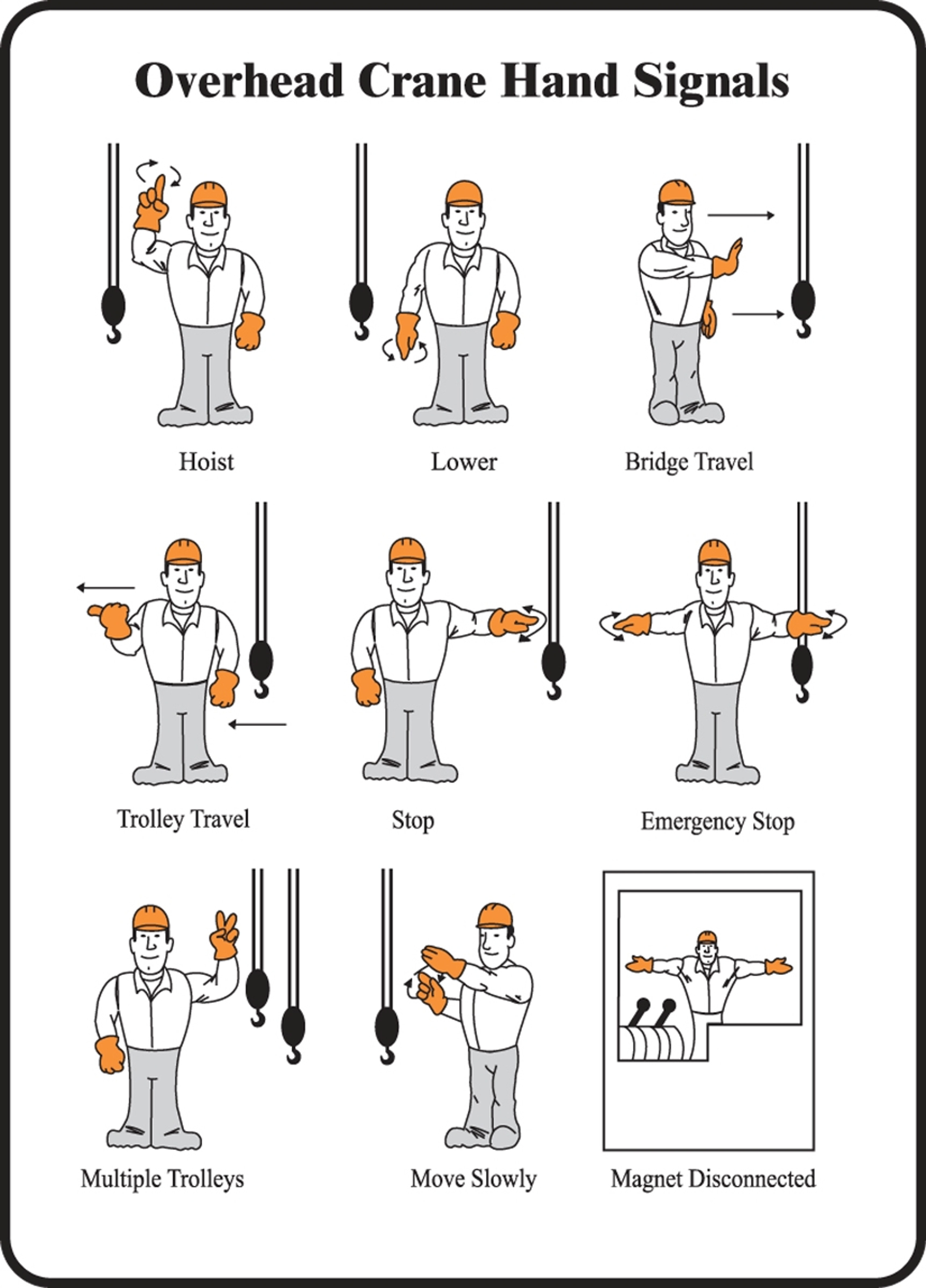
Crane Hand Signals Chart
It Lists Signals For Stopping, Hoisting, Lowering, Trolley Out, Trolley In, Swinging, And Stopping Everything.
When There Is A Lot Of Traffic At A Worksite, It Is Essential For Workers To Be Able To Use Hand Signals.
With Arm Extended Downward, Forefinger Pointing Down, Move Hand In Small Horizontal Circles.
(For Crawler Cranes Only) Travel (One Track) Indicate Track To Be Locked By Raising Fist On That Side.
Related Post: