
Italian Preposition Chart
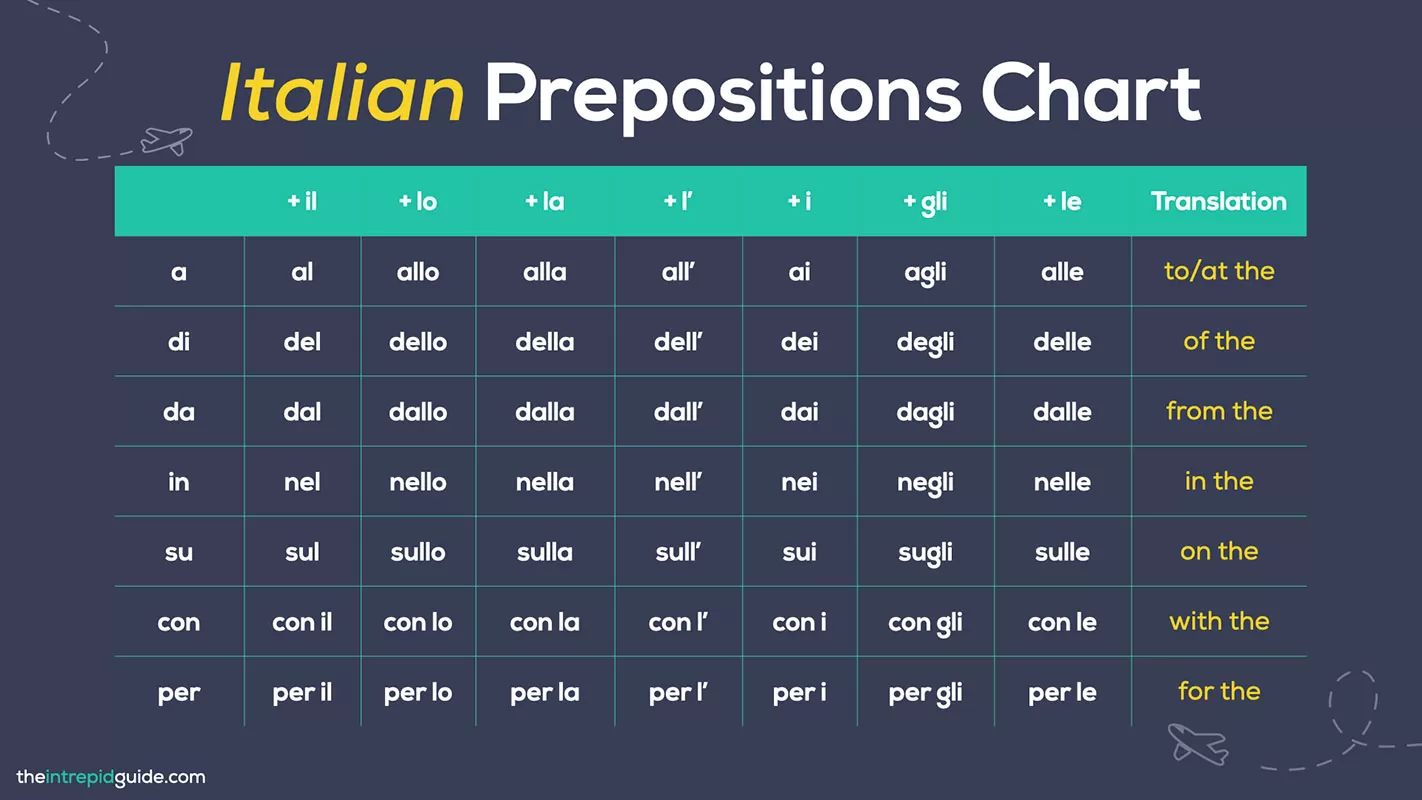
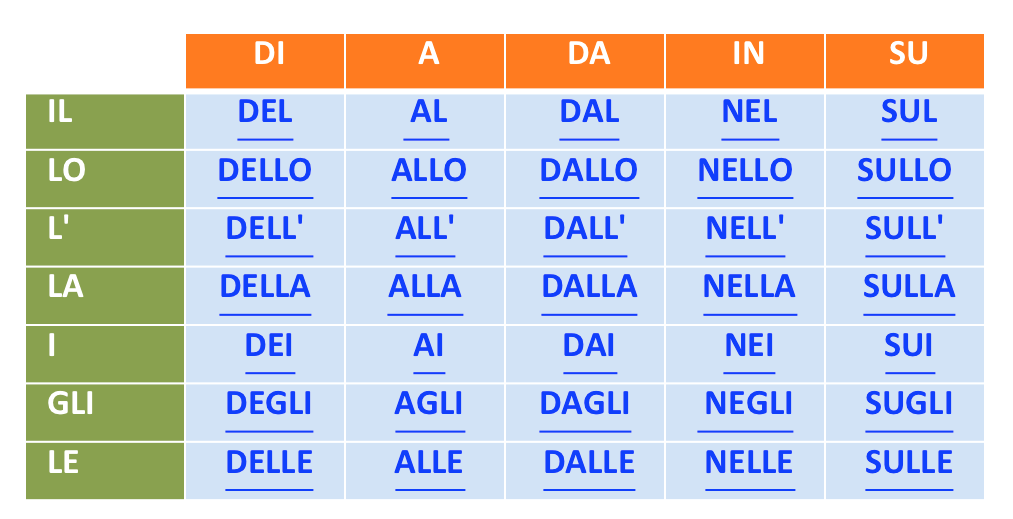
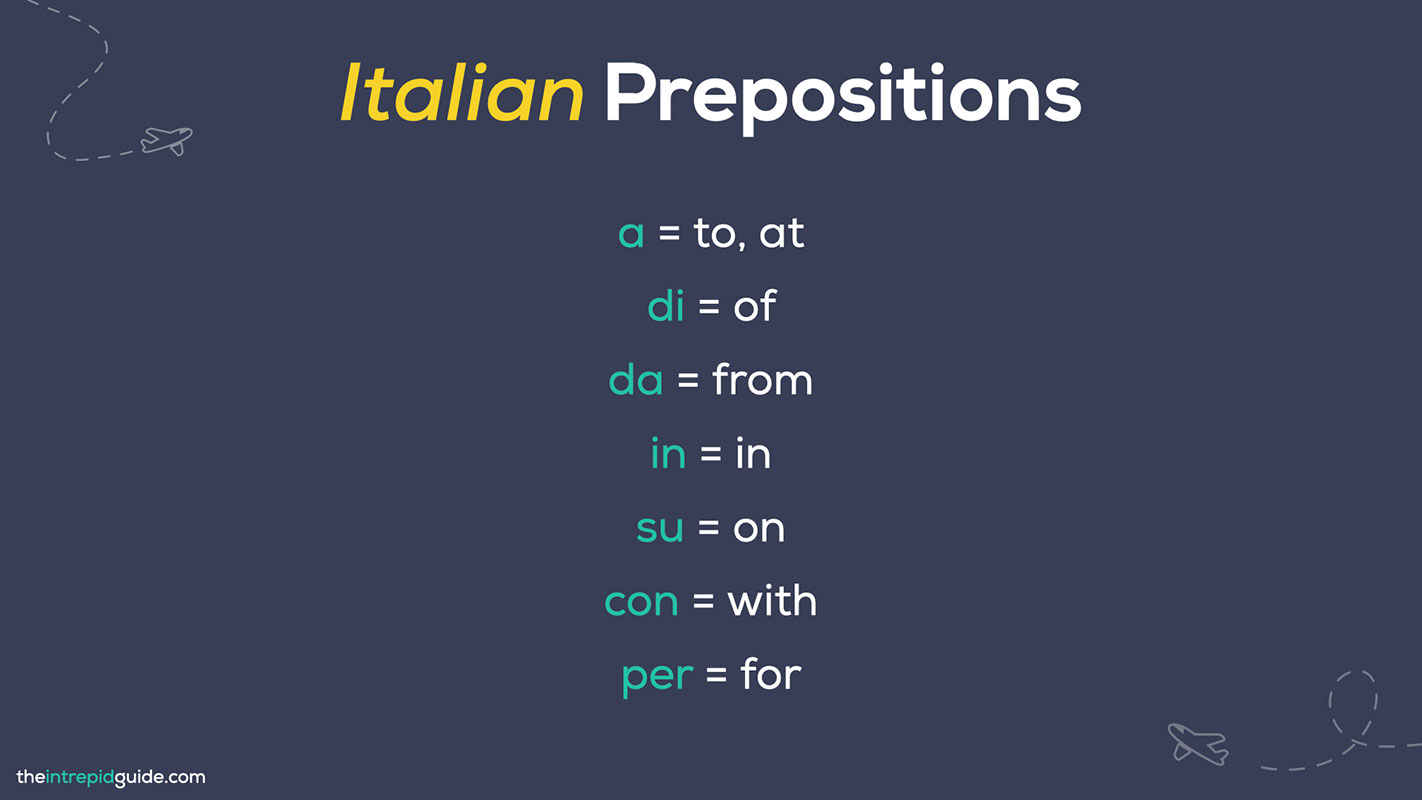
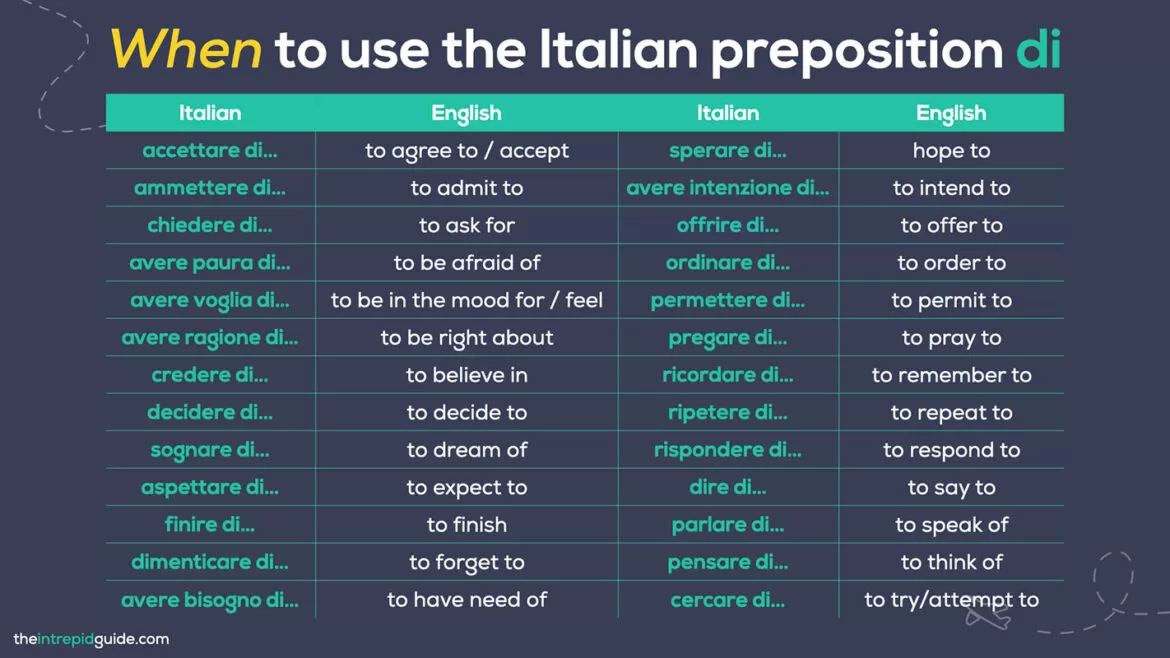
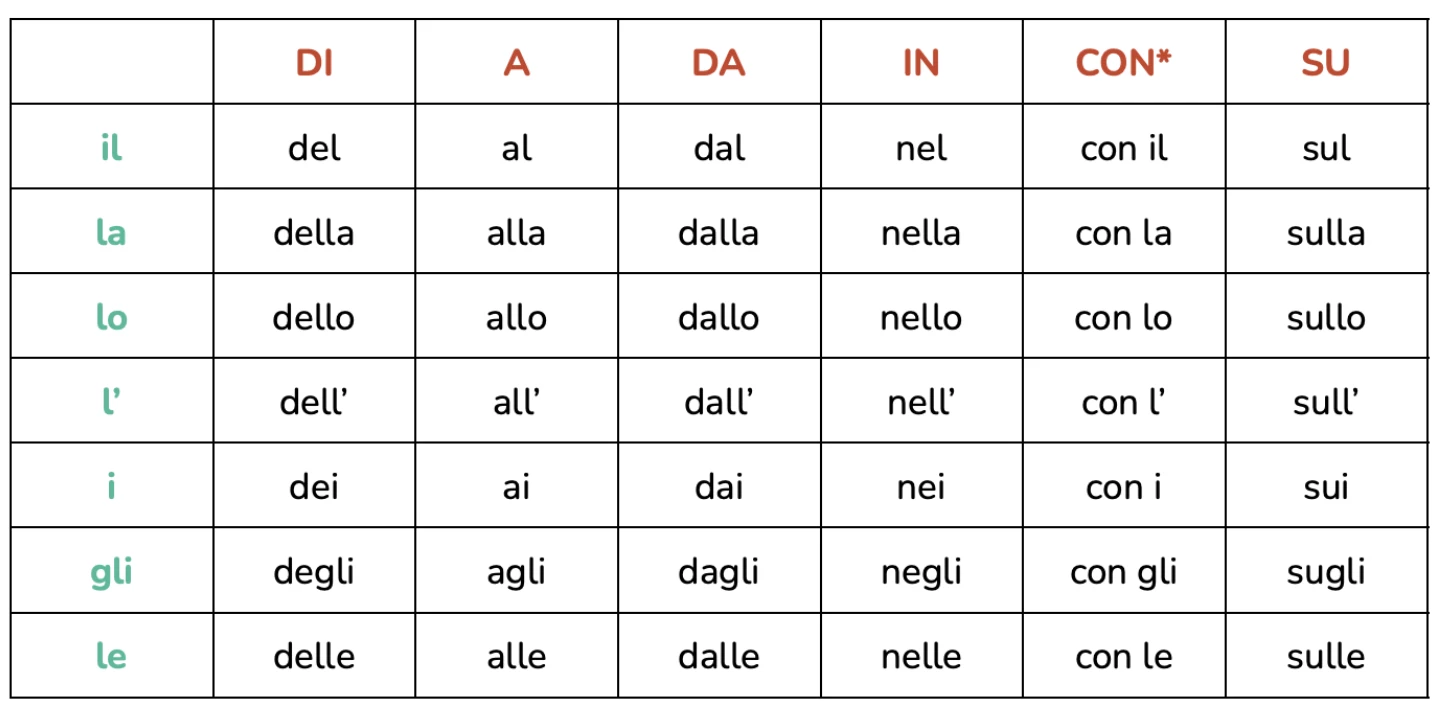
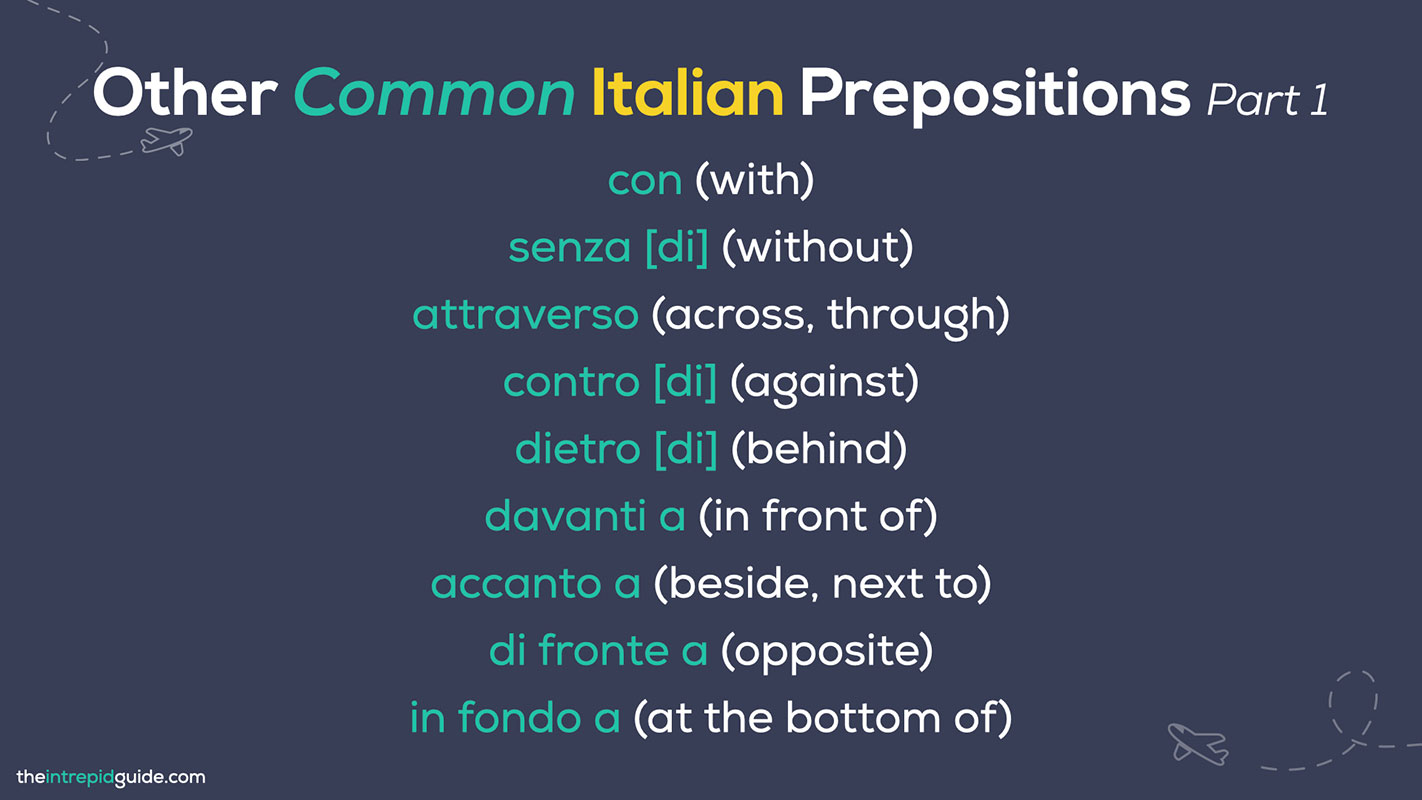
Italian Preposition Chart - I say ‘general’, because their meanings may vary, which we will explore. Includes english and italian translations and example sentences and a prepositions chart. A (to, at) di (of) da (from) in (in) su (on) con (with) per (for) italian prepositions chart. Di, a, da, in, con, su, per, tra, fra. Download your free pdf guide to italian prepositions and how to use them properly. Web common prepositions in english include in, on, with, to, of and from, and in italian in, a, di, da, per, con, su, and fra/tra. Carlo è di roma = carlo is from rome. Web the basic italian prepositions are di, a, da, in, con, su, per, tra/fra. Web the italian prepositions are: We’ll uncover the meanings behind common italian prepositions, helping you grasp their contextual usage. (let's learn together!) i promise not to spam you. We list them not in alphabetical order but in how italian students learn them in school: Web italian prepositions are tiny language blocks which are incredibly important to ensure you deliver the right meaning. — i take my nap at one. [ giada’s suitcase] material → il bicchiere è di vetro. Sometimes it's the little things in language that make the biggest difference. Web the italian preposition a is generally summarized as to, at, or in, but it has a few more meanings and uses than that. Questo è il libro di maria = this is maria’s book * *in italian we don’t have the saxon genitive. Articulated prepositions, on the other hand, are formed by combining a simple preposition with a definite article, such as “il,” “lo,” “la,” “l’,” or “i,” “gli,” “le,” depending on the gender and number of the noun that follows. In the lessons of our italian course a1.1 we have learnt many prepositions. We’ll uncover the meanings behind common italian prepositions, helping you grasp their contextual usage. Di, da, a, in, su, per, con and fra/tra. Sometimes it's the little things in language that make the biggest difference. And prepositions are no exception. You can read about how prepositions and articles merge in our article on articulated prepositions. To say where someone is from. The other prepositions don't have a tense form, even when matched with the article. Di, a, da, in, con, su, per and tra or fra. Download your free pdf guide to italian prepositions and how to use them properly. Web italian prepositions and articles chart. In, con, su, per, tra, fra, a, da, di. You can read about how prepositions and articles merge in our article on articulated prepositions. Web in italian, there are nine simple prepositions. Web the italian prepositions are: Articulated prepositions, on the other hand, are formed by combining a simple preposition with a definite article, such as “il,” “lo,” “la,” “l’,”. We list them not in alphabetical order but in how italian students learn them in school: Below is a list of the simple prepositions and a few example sentences. In the lessons of our italian course a1.1 we have learnt many prepositions. Web learning italian prepositions is crucial for speaking like a native. In this overview of all italian prepositions. The prepositions in, a, su, a, di, da when followed by a definite article, combine into one word. The literal translation of the sentence would be ‘this is the book of maria’. Di, a, da, in, con, su, per, tra, fra. When describing someone as capable of doing or determined to do something, a preposition is required between the adjective. Are essential for expressing ownership, movement, and time. — i take my nap at one. Or articulated, when they are tense with the article, forming a whole word. With this guide, you’ll know when to use each preposition, and you’ll have a complete reference to come back to. Note that prepositions sometimes merge with articles. Today, let’s discover what these are, and how these italian prepositions differ from english (because they can’t always be used the same way!). To say where someone is from. Web in english, our prepositions include “at”, “in”, “of”, “about”, “with”, “from”, and so on. Di → “of” or “from”. Web as we will see in this post, the main italian. Di, a, da, in, su, and per can be simple, when they are used alone, without article; — i take my nap at one. It’s italian prepositions made easy! Note that prepositions sometimes merge with articles. Articulated prepositions, on the other hand, are formed by combining a simple preposition with a definite article, such as “il,” “lo,” “la,” “l’,” or. And prepositions are no exception. In this lesson you will find all prepositions summarized briefly and clearly to help you learn them better. Di, a, da, in, con, su, per and tra/fra. A (to, at) di (of) da (from) in (in) su (on) con (with) per (for) italian prepositions chart. Web in italian there are 8 prepositions: In this lesson you will find all prepositions summarized briefly and clearly to help you learn them better. When describing someone as capable of doing or determined to do something, a preposition is required between the adjective and verb. Web italian prepositions are tiny language blocks which are incredibly important to ensure you deliver the right meaning. Carlo è di. Web the simple prepositions in italian are “di,” “a,” “da,” “in,” “con,” “su,” “per,” “tra” (or “fra”). Di, a, da, in, su, and per can be simple, when they are used alone, without article; When describing someone as capable of doing or determined to do something, a preposition is required between the adjective and verb. Questo è il libro di maria = this is maria’s book * *in italian we don’t have the saxon genitive. Web learning italian prepositions is crucial for speaking like a native. Di, a, da, in, con, su, per, tra, fra. Di, a, da, in, con, su, per and tra/fra. Web in italian there are 8 prepositions: I say ‘general’, because their meanings may vary, which we will explore. Or articulated, when they are tense with the article, forming a whole word. We list them not in alphabetical order but in how italian students learn them in school: Di → “of” or “from”. Download your free pdf guide to italian prepositions and how to use them properly. You’ll have them in almost every sentence, like in these examples: Here are the most common prepositions in italian and their general meanings. Di — of/from/at/about, and can also be used to indicate possession.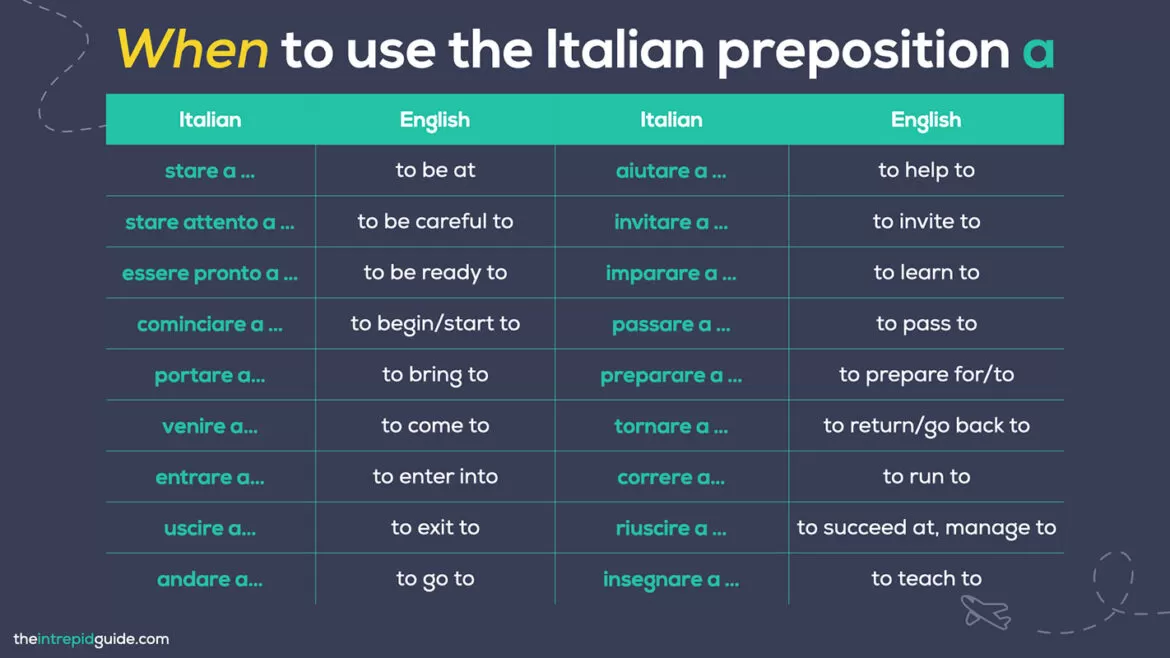
Italian Prepositions The Only Guide You'll Ever Need (PLUS Italian
Italian Prepositions The Only Guide You'll Ever Need (PLUS Italian

Italian Prepositions Chart
Prepositioni articolate (Articulated prepositions) Italian 101

How to Know Which Italian Preposition to Use
Italian Prepositions The Only Guide You'll Ever Need (PLUS Italian
Italian Prepositions The Only Guide You'll Ever Need (PLUS Italian

Chart of Italian Prepositions Learn Italian Grammar
The Italian Prepositions Explained Smart Italian Learning
Italian Prepositions The Only Guide You'll Ever Need (PLUS Italian
One Of The Eight Italian Parts Of Speech, Prepositions Are Short But Essential Words Which Are Placed After A Verb, Noun, Or Adjective In Order To Indicate A Relationship Between That Word And The Noun Or Pronoun That Follows.
Let’s Try To Understand When And How To Use Them!
Articulated Prepositions, On The Other Hand, Are Formed By Combining A Simple Preposition With A Definite Article, Such As “Il,” “Lo,” “La,” “L’,” Or “I,” “Gli,” “Le,” Depending On The Gender And Number Of The Noun That Follows.
Sometimes It's The Little Things In Language That Make The Biggest Difference.
Related Post: