
Latin Noun Chart
Latin Noun Chart - Just enter your answer to each question into the corresponding field, and press enter or return on your keyboard to check it and move on. 2) neuter nouns differ only in the accusative singular and nominative and accusative plural. Nouns are divided into three genders, known as masculine, feminine, and neuter. ‘the widow’ is the subject, as she is doing the verb. As is customary, the vocative and the locative do not appear in the charts. If you'd like to branch off into other vocabulary, there's a blank worksheet at the end of the resource for your students to fill out. However, there are different endings for each combination of case and number in each declension. Web latin declension is the set of patterns according to which latin words are declined—that is, have their endings altered to show grammatical case, number and gender. Web latin nouns declension free printable. There’s also an alternate version with the vocative included and the forms in a slightly different order (nominative, vocative, accusative, genitive, dative, ablative). Web here is an example of a full declension chart of a first declension noun: Then, we can add the appropriate endings. Us, i [masculine] um, i. There’s also an alternate version with the vocative included and the forms in a slightly different order (nominative, vocative, accusative, genitive, dative, ablative). Web the dative and ablative plural usually end in is in the first and second declension and in the third declension (and occasionally, the first), the s is separated from its vowel by a bu as in the third declension noun hostibuus and the first declension filiabus. Web case endings of the five declensions. 2) neuter nouns differ only in the accusative singular and nominative and accusative plural. Nominative, genitive, vocative, accusative, dative, ablative, and locative. Web latin nouns chart nom. The subject is the person or thing doing the verb. As is customary, the vocative and the locative do not appear in the charts. Welcome to this practice page for noun forms. Web in latin, nouns can take six different cases, and some proper nouns can take a seventh. Just choose the declension and noun you want to practice from the chart below, and type the forms in the box. Nominative, genitive, vocative, accusative, dative, ablative, and locative. The charts list the main five cases in the order traditionally used in the united states: A, ae [feminine] second declension. Get the printable pdf by subscribing below. The subject is the person or thing doing the verb. Web in latin, nouns can take six different cases, and some proper nouns can take a seventh. I’ll send you the worksheets for each declension. Declension tables of many latin nouns, with all cases. Exercise i (chapters 1 & 2) exercise ii (chapters 3 & 4) exercise iii (chapters 5 & 6) exercise v (chapters 9 & 10) 1) masculine. Nouns, pronouns, and adjectives are declined (verbs are conjugated), and. Web 1st declension nouns 2nd declension nouns 1st & 2nd declension nouns 3rd declension nouns 1st, 2nd & 3rd declension nouns 4th declension nouns 5th declension nouns ablative uses. Get the printable pdf by subscribing below. Web latin nouns chart nom. Web case endings of the five declensions. Just enter your answer to each question into the corresponding field, and press enter or return on your keyboard to check it and move on. However, there are different endings for each combination of case and number in each declension. 2) neuter nouns differ only in the accusative singular and nominative and accusative plural. Declension tables of many latin nouns,. Latin noun cases, example : Web the dative and ablative plural usually end in is in the first and second declension and in the third declension (and occasionally, the first), the s is separated from its vowel by a bu as in the third declension noun hostibuus and the first declension filiabus. Web 1st declension nouns 2nd declension nouns 1st. Us, i [masculine] um, i. Web nouns, pronouns, adjectives and participles are declined in six cases: Web here is an example of a full declension chart of a first declension noun: These are called nominative, genitive, dative, accusative, ablative, vocative, and locative. Nominative, genitive, vocative, accusative, dative, ablative, and locative. Nouns are divided into three genders, known as masculine, feminine, and neuter. Just choose the declension and noun you want to practice from the chart below, and type the forms in the box indicated. The vocative is like the nominative, except in singular nouns ending : The subject is the person or thing doing the verb. Web this post presents. Latin noun cases, example : The regular case endings of the five declensions are as follows. The yellow indicates the endings that differ between the masculine and neuter declensions. Nouns, pronouns, and adjectives are declined (verbs are conjugated), and. The subject is the person or thing doing the verb. Then, we can add the appropriate endings. However, there are different endings for each combination of case and number in each declension. Us, i [masculine] um, i. As is customary, the vocative and the locative do not appear in the charts. Exercise i (chapters 1 & 2) exercise ii (chapters 3 & 4) exercise iii (chapters 5 & 6) exercise. Just enter your answer to each question into the corresponding field, and press enter or return on your keyboard to check it and move on. Nouns, pronouns, and adjectives are declined (verbs are conjugated), and. Used for the subject of the verb. Latin noun cases, example : Web latin declension is the set of patterns according to which latin words are declined—that is, have their endings altered to show grammatical case, number and gender. A, ae [feminine] second declension. The subject is the person or thing doing the verb. If you remember, the ending of a noun is based on its case and number. The cases and their grammatical position in sentences. However, there are different endings for each combination of case and number in each declension. Another two—locative and instrumental—are vestigial and are not often used. Nouns are divided into three genders, known as masculine, feminine, and neuter. There’s also an alternate version with the vocative included and the forms in a slightly different order (nominative, vocative, accusative, genitive, dative, ablative). Then, we can add the appropriate endings. Nominative, genitive, dative, accusative, and ablative. 2) neuter nouns differ only in the accusative singular and nominative and accusative plural.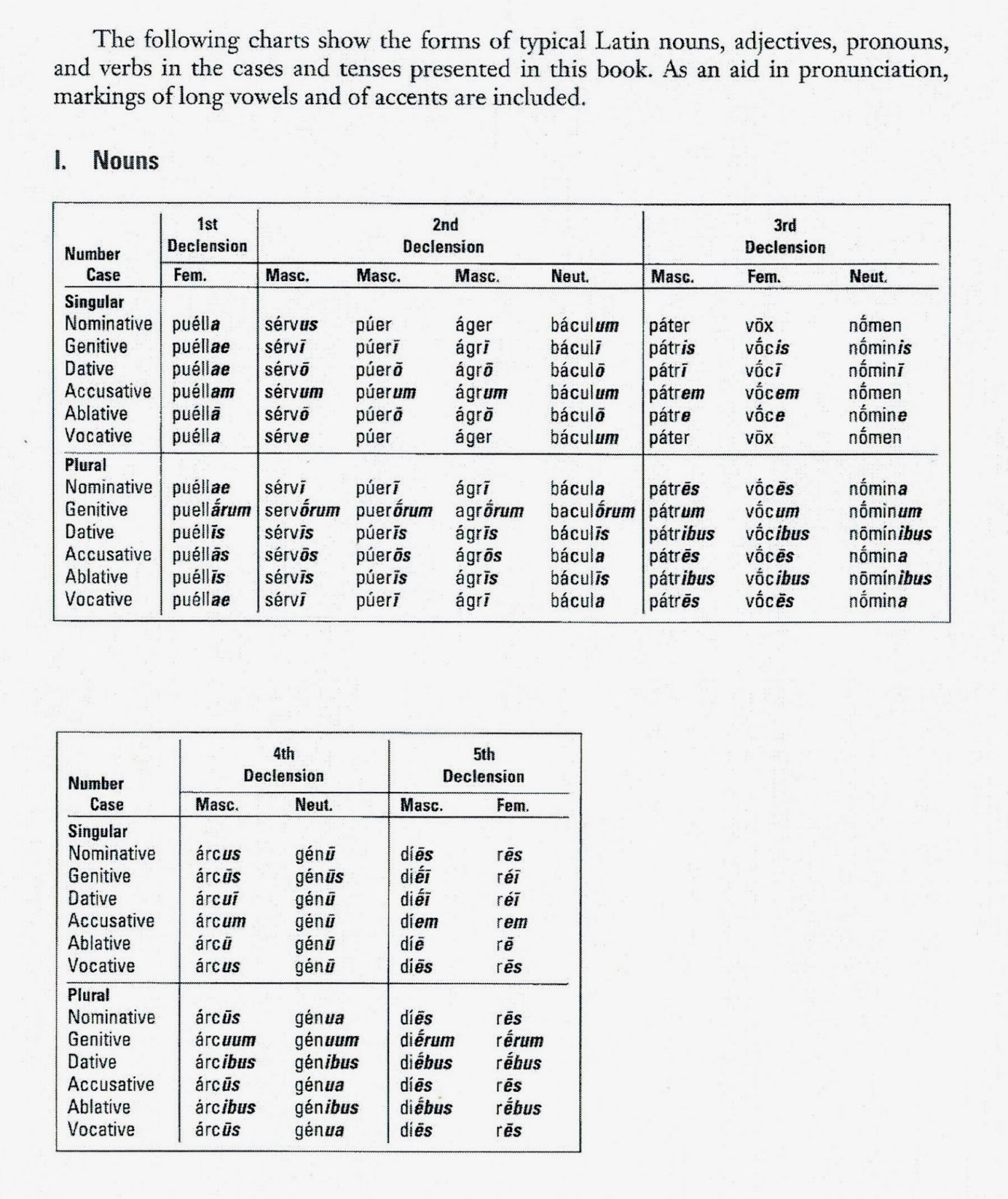
Latin I Latin Noun Charts for Quiz

Latin Verb and Noun Endings Quick Reference Sheet Lutheran Homeschool

The Latin Nouns Declensions chart below (also available here as a
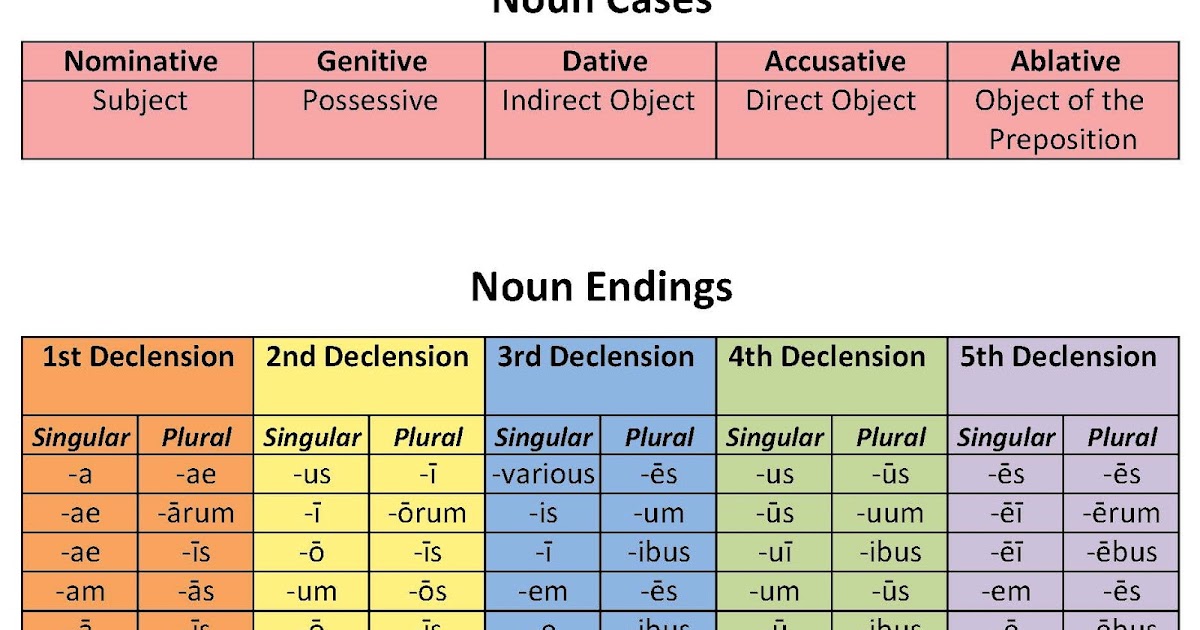
Nouns and their Cases

Latin Noun Endings Latin language learning, Science quotes, Classical

Latin Noun Declension Chart Five J's Homeschool

Latin Grammar Nouns Dropout Latin
Basic Latin Charts PDF Grammatical Gender Latin
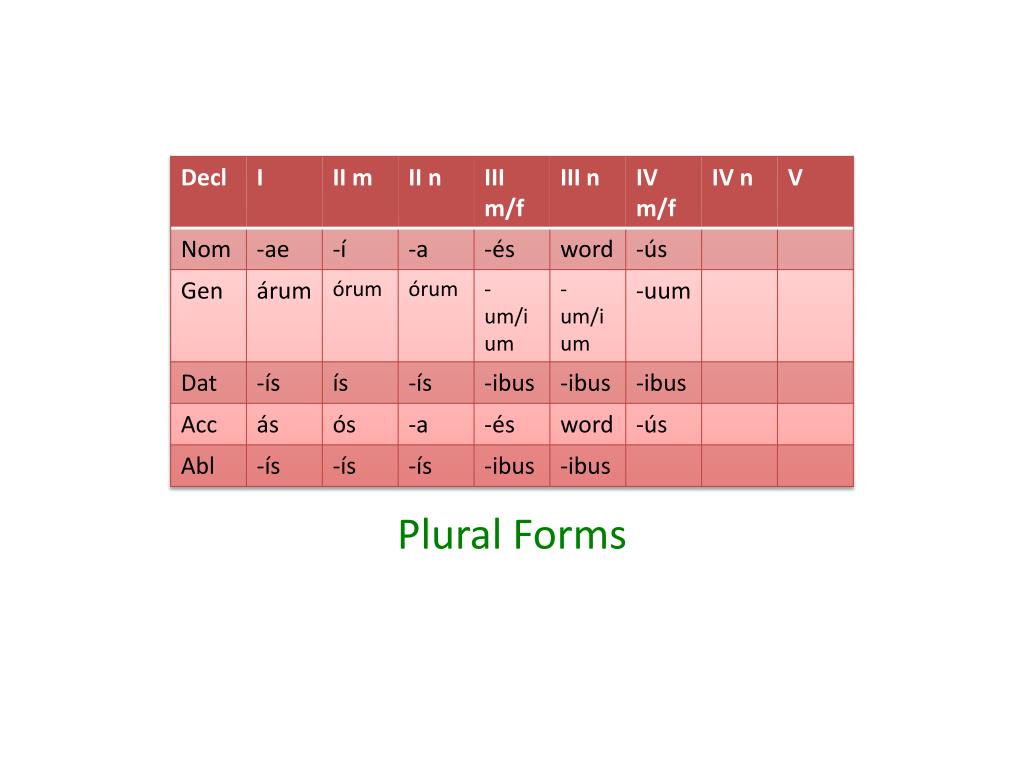
PPT Latin Noun Chart Plural Forms PowerPoint Presentation, free
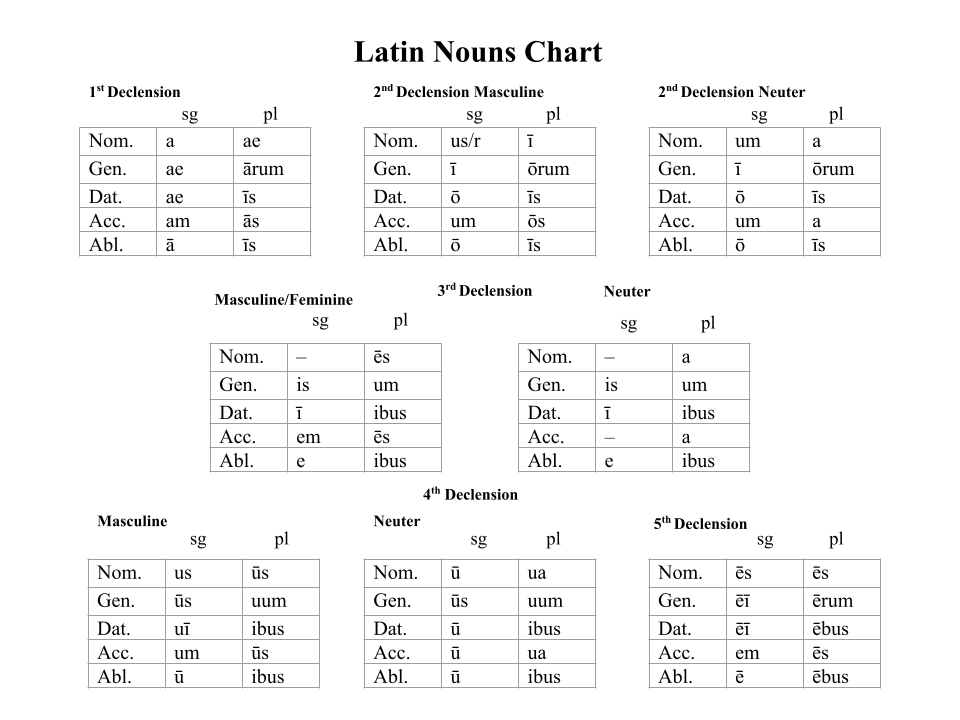
Nouns Chart Latin Dictionary/Notes
The Charts List The Main Five Cases In The Order Traditionally Used In The United States:
The Vocative Is Like The Nominative, Except In Singular Nouns Ending :
As Is Customary, The Vocative And The Locative Do Not Appear In The Charts.
Web Case Endings Of The Five Declensions.
Related Post:
